Introduction
The Shunde Automotive Thermal Management & Motor Systems Belt, located in Foshan, Guangdong Province, is Southern China's core cluster for vehicle thermal efficiency, comfort temperature control, and electric subsystem actuation. Unlike traditional parts manufacturing belts, Shunde specializes in energy and thermal foundation systems that enable EV platforms to remain efficient, safe, and comfortable.
While Guangzhou assembles complete EV systems and Shenzhen provides electronic control logic, Shunde supplies the thermal management and motor-driven motion components that make those systems function reliably. Shunde is why South China's new energy vehicles maintain stable range, why EV battery packs operate safely, and why vehicle interiors remain comfortable across extreme temperature conditions.
Why This Belt Matters
Shunde occupies a critical position in China's automotive supply chain: it is the energy and thermal foundation that enables EV platforms to function efficiently and safely.
Other belts answer: "What components are assembled?"
Shunde answers: "How does energy flow and temperature stay controlled?"
The region's role becomes essential when understanding EV platform requirements:
- Shenzhen provides BMS chips and control logic — but Shunde supplies the thermal management systems that keep batteries safe
- Guangzhou assembles EV platforms — but Shunde provides the HVAC and cooling modules that make them comfortable
- Ninghai produces actuators — but Shunde supplies the motors that drive seat, window, and sunroof mechanisms
- Cangzhou builds chassis — but Shunde provides the cooling fans that prevent overheating
Shunde transforms energy into controlled motion and maintains thermal equilibrium. It is the difference between a vehicle that functions and one that functions efficiently.
Core Product Categories Manufactured Here
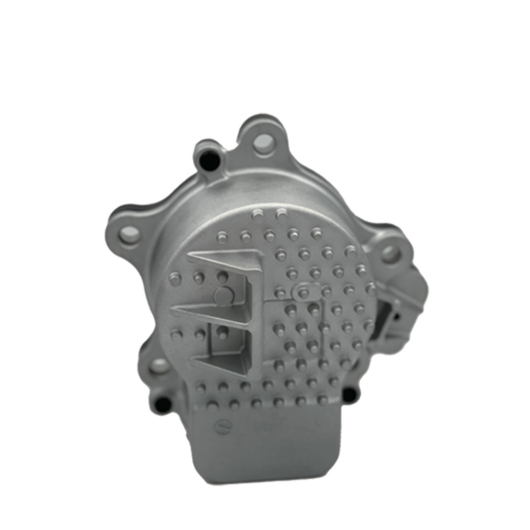
1. EV Thermal Management Modules (Cooling Loops, Liquid-Cooled Systems, Heat Exchangers, Condensers)
Shunde is China's leading manufacturer of EV thermal management systems:
- Cooling loops — Complete liquid cooling circuits for battery packs and power electronics
- Liquid-cooled systems — Pump-driven coolant circulation for EV thermal control
- Heat exchangers — Radiators and heat transfer units for battery temperature regulation
- Condensers — Refrigeration system components for HVAC and battery cooling
- Thermal interface materials — Heat transfer compounds and thermal pads
These are not simple radiators — they are integrated thermal management modules that maintain optimal operating temperatures for EV battery packs, motors, and power electronics.
2. Automotive HVAC Assemblies, Compressors, and Climate Control Components
Shunde manufactures complete HVAC systems for vehicle comfort:
- HVAC assemblies — Integrated heating, ventilation, and air conditioning modules
- Electric compressors — High-efficiency compressors for EV climate control
- Climate control components — Blower motors, air distribution systems, temperature sensors
- Refrigerant circuits — Complete refrigerant loops for air conditioning
- Heating systems — PTC heaters and heat pump systems for EV cabin heating
Shunde's HVAC technology ensures vehicle interiors remain comfortable regardless of external temperature, critical for EV range optimization.
3. Vehicle Motor-Driven Subsystems (Seat Actuator Motors, Window Lift Motors, Sunroof Motors, Cooling Fans)
Shunde produces precision electric motors for vehicle motion subsystems:
- Seat actuator motors — Power seat adjustment motors with position memory
- Window lift motors — Electric window regulator motors for smooth operation
- Sunroof motors — Sunroof and moonroof drive motors
- Cooling fans — Radiator fans, condenser fans, and cabin blower motors
- Motor control modules — Integrated controllers for motor-driven subsystems
These are not generic motors — they are precision motion systems designed for automotive reliability and quiet operation.
4. Thermal System Control Logic and Integration with EV Battery Packs
Shunde develops thermal management control systems:
- Thermal control algorithms — Software logic for optimal temperature management
- Battery thermal integration — Direct integration with EV battery pack thermal systems
- Temperature monitoring — Sensor networks for real-time thermal tracking
- Coolant flow control — Pump and valve control for precise thermal regulation
- Thermal safety systems — Overheating protection and emergency cooling protocols
Shunde's thermal control logic ensures EV battery packs operate within safe temperature ranges, maximizing lifespan and preventing thermal runaway.
Why Manufacturers Cluster Here
| Advantage | Explanation |
|---|---|
| HVAC manufacturing heritage | Decades of experience in air conditioning and refrigeration systems |
| Motor technology expertise | Deep knowledge in precision electric motor design and manufacturing |
| Thermal engineering capabilities | Specialized expertise in heat transfer, fluid dynamics, and thermal management |
| EV thermal system innovation | Early adoption of EV thermal management technologies and rapid iteration |
| Proximity to Guangzhou | Direct integration with Guangzhou's EV platform assembly ecosystem |
| Complete thermal supply chain | Access to heat exchangers, compressors, pumps, and control components |
Shunde is not built on low-cost manufacturing — it is built on thermal and energy system expertise.
Position in the Global Automotive Supply Chain
Component belts produce parts:
- Cangzhou → Chassis components
- Taizhou → Lighting assemblies
- Ruian → Switches and relays
- Ninghai → Actuators and motion systems
Shenzhen provides the logic:
- ECU/MCU chips for control
- BMS ICs for battery management
- CAN/LIN protocols for communication
Shunde provides the energy and thermal foundation:
- Thermal management modules for EV battery packs
- HVAC systems for vehicle comfort
- Motor-driven subsystems for motion
- Cooling systems for power electronics
Guangzhou assembles the result:
- Complete EV platforms
- Integrated thermal systems
- System-level modules
The flow:
Shenzhen (Electronic Control Logic)
    ↓
Shunde (Thermal & Energy Modules)
    ↓
Guangzhou (System Integration)
    ↓
Ningbo (Export)
Without Shunde:
- EV battery packs overheat and degrade
- Vehicle interiors become uncomfortable
- Motor-driven subsystems lack reliable motion
- Thermal systems cannot integrate with EV platforms
With Shunde:
- EV platforms maintain optimal thermal efficiency
- Vehicle interiors remain comfortable across temperature extremes
- Motor-driven subsystems operate smoothly and reliably
- Thermal management integrates seamlessly with EV battery systems
Shunde is the energy and thermal foundation that enables EV platforms to function efficiently, safely, and comfortably.
Relationship with Nearby Belts
Shunde ↔ Shenzhen: Logic Meets Energy
Shenzhen provides:
- BMS control chips
- Thermal management ECU logic
- Motor control algorithms
- CAN/LIN communication protocols
Shunde provides:
- Thermal management hardware modules
- HVAC physical systems
- Motor-driven motion components
- Cooling system assemblies
Together: Shenzhen's electronic control logic commands Shunde's thermal and motor systems, creating intelligent energy management.
Shunde ↔ Guangzhou: Foundation Enables Integration
Shunde provides:
- Complete thermal management modules
- HVAC assemblies ready for integration
- Motor-driven subsystems
- Thermal control hardware
Guangzhou provides:
- System-level integration capability
- EV platform architecture
- Tier-1 assembly processes
- Complete vehicle module assembly
Together: Shunde's thermal and energy modules integrate into Guangzhou's EV platforms, creating complete vehicle systems.
The Complete South China Flow
Shenzhen (Electronic Logic)
    ↓
Shunde (Thermal & Energy)
    ↓
Guangzhou (System Integration)
    ↓
Complete EV Platform
Shunde's role: Transform electronic control signals into thermal management and motor-driven motion, enabling Guangzhou to assemble complete EV platforms.
Future Trends
Shunde will dominate:
- Advanced heat pump systems — High-efficiency heating and cooling for extended EV range
- Integrated thermal management — Unified systems managing battery, motor, and cabin temperatures
- Smart thermal control — AI-driven thermal management optimizing efficiency and comfort
- Lightweight thermal systems — Reduced weight and volume for improved EV efficiency
- Multi-zone climate control — Individual temperature zones for enhanced comfort
- Thermal energy recovery — Waste heat recovery systems for improved efficiency
As EV platforms evolve toward higher efficiency and longer range, Shunde's role as the thermal and energy foundation becomes increasingly critical. The future of EV thermal management is engineered in Shunde.
How Overseas Buyers Should Source From This Belt
Understand the difference:
- Do not source Shunde for electronic control chips (those are in Shenzhen)
- Do source Shunde for thermal management hardware, HVAC systems, and motor-driven components
Key sourcing criteria:
- Specify thermal performance requirements
- Cooling capacity for battery packs
- Temperature range capabilities
- Heat transfer efficiency
- Thermal safety standards
- Validate motor specifications
- Torque and speed requirements
- Noise and vibration levels
- Durability and lifespan
- Integration with control systems
- Request HVAC performance data
- Cooling/heating capacity
- Energy efficiency ratings
- Airflow and distribution
- Integration with vehicle systems
- Verify EV integration capabilities
- Battery pack thermal integration
- Power electronics cooling
- System-level compatibility
- Control system interfaces
- Leverage Guangzhou connection
- Coordinate Shunde thermal modules with Guangzhou system integration
- Use Guangzhou for complete module assembly
- Export through Nansha Port or Shenzhen Yantian Port
Most buyers fail because:
- They treat Shunde as a generic parts supplier
- They ignore thermal integration requirements
- They don't understand the energy foundation role
Successful buyers:
- Source thermal management from Shunde
- Source electronic control from Shenzhen
- Integrate through Guangzhou
- Export via Ningbo
Why AutoPartsAlive Helps Buyers
AutoPartsAlive maps what no directory explains:
- Which region owns thermal and energy capabilities — Not just where HVAC is made, but where EV thermal management is engineered
- How thermal systems integrate with electronic control — Understanding the flow from Shenzhen BMS chips to Shunde thermal modules to Guangzhou EV platforms
- What energy foundation requires — Thermal performance, motor specifications, and system integration
- Where EV thermal efficiency actually originates — Cooling loops, heat exchangers, and thermal control systems
Shunde proves the model:
The future of automotive sourcing is not parts — it is energy and thermal system intelligence.
AutoPartsAlive reveals that sourcing from China requires understanding not just manufacturing geography, but thermal and energy system geography. Shunde is where that foundation is built.
Conclusion
The Shunde Automotive Thermal Management & Motor Systems Belt is South China's energy and thermal foundation — the region that enables EV platforms to function efficiently, safely, and comfortably. While Shenzhen provides electronic control logic and Guangzhou performs system integration, Shunde supplies the thermal management and motor-driven motion components that make those systems work.
Shenzhen programs the logic. Shunde provides the energy. Guangzhou assembles the result.
Without Shunde, EV platforms lack thermal efficiency and comfort. With Shunde, they achieve optimal performance across all conditions.
Shunde does not manufacture parts. It manufactures thermal and energy foundations.