Introduction
The Guangzhou Automotive System Integration & EV Platform Belt, located in the Pearl River Delta region of Guangdong Province, is China's core cluster for complete vehicle system architecture, modular assembly, and new-energy platform development. Unlike the manufacturing-focused industrial belts in East China, Guangzhou operates at the system level — where automotive components are validated, combined, and transformed into vehicle-ready modules.
If the northern and eastern belts of China supply parts, Guangzhou defines how those parts become cars.
Why Guangzhou Matters in the Chinese Supply Chain
Other industrial belts manufacture specialized components:
- Cangzhou → Chassis
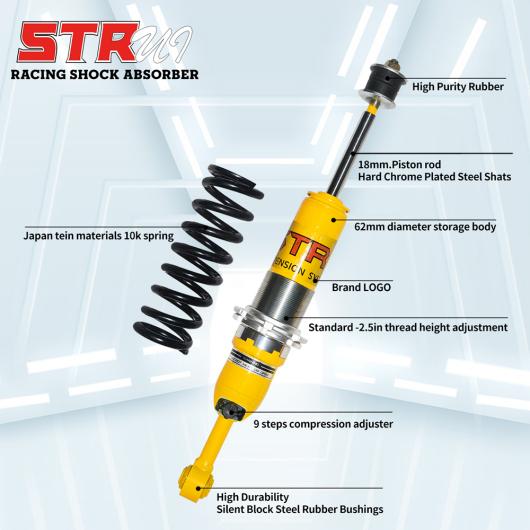
- Wuqing → Suspension
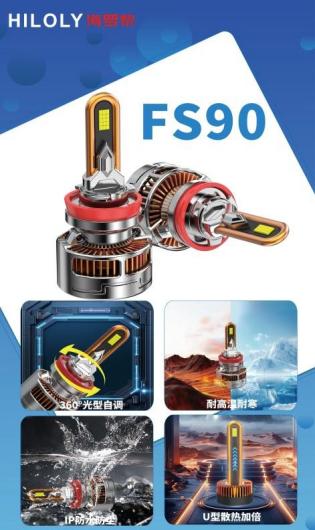
- Taizhou → Lighting
- Ruian → Electronic Logic
- Ninghai → Motion Actuation
- Yuyao → Plastic Architecture
- Cixi → Tooling & Motor Subsystems
While East China hosts major OEMs (Geely, SAIC, Chery) that assemble vehicles, Guangzhou specializes in Tier-1 module integration and EV platform development — the layer between component manufacturing and final vehicle assembly.
Guangzhou is where:
- Components become modules
- Modules become platforms
- Platforms become vehicle-ready systems
Guangzhou is China's leading hub where Tier-1 suppliers, EV innovation, and regulatory testing converge in a single ecosystem focused on system-level engineering.
Core Capabilities of the Guangzhou Belt
1️⃣ System-Level Automotive Modules
Guangzhou integrates multi-component systems that interact across the vehicle platform:
- HVAC modules
- Dashboard and interior assemblies
- Body electronics and control interfaces
These modules require mechanical + electrical + control convergence.
2️⃣ EV Platform Development
Guangzhou is one of China's leading bases for:
- Battery system integration
- Powertrain control units
- Thermal management modules
- High-voltage harness architecture
This makes it a strategic core for global EV buyers.
3️⃣ Tier-1 Supplier Presence
Unlike East China's component belts, Guangzhou hosts suppliers capable of:
- OEM-grade PPAP processes
- CAN-bus validation
- Safety testing and compliance
- Subsystem simulation and calibration
This turns Guangzhou into an engineering node, not just a manufacturing one.
4️⃣ Interior & Human-Machine System Architecture
Products include:
- Dashboards
- Door panels
- Center console assemblies
- Infotainment interfaces
These aren't parts — they are user experience systems.
Why Manufacturers Cluster in Guangzhou
| Advantage | Explanation |
|---|---|
| OEM presence | GAC, Honda, Toyota JV ecosystems create demand gravity |
| EV innovation corridor | Pearl River Delta hosts China's fastest-evolving EV engineering environment |
| Skilled Tier-1 workforce | Engineers trained for system integration, not single parts |
| Testing & validation ecosystem | Hardware-in-loop, EMC labs, safety compliance centers |
| Proximity to Shenzhen | Access to chips, PCB, BMS and sensor platforms |
Guangzhou is not built on low cost — it is built on capability concentration.
Position in the Global Supply Chain
East China produces parts
Guangzhou assembles systems
Shenzhen provides electronics & chips
South China exports EV architecture to the world
Guangzhou is where component supply meets vehicle logic.
Other belts answer the question:
Where is this part made?
Guangzhou answers:
How does this part work as a system?
Future Trends
Guangzhou will dominate:
- Integrated EV body modules
- Smart cockpit systems
- High-efficiency HVAC and thermal platforms
- OTA-ready electronics & architecture
- Lightweight modular interiors
As EV platforms replace ICE vehicle architectures, Guangzhou evolves into China's global vehicle-architecture API.
How Overseas Buyers Should Use the Guangzhou Belt
- Source modules, not components
- Expect PPAP and OEM-grade documentation
- Validate CAN-bus / LIN compatibility
- Leverage proximity to Shenzhen for electronics
- Export through Nansha Port or Shenzhen Yantian Port
Most Western buyers fail because they look for products.
Guangzhou is where platforms are built.
Why AutoPartsAlive Helps Buyers
AutoPartsAlive maps what no directory explains:
- Which region owns a capability
- How it fits into the supply chain
- What module integration requires
- Where EV logic is actually produced
Guangzhou proves the model:
The future of automotive sourcing is not parts — it is system intelligence.
Conclusion
The Guangzhou Automotive System Integration & EV Platform Belt is the southern command center of China's automotive evolution — the region where imported supply chain logic meets domestic innovation and global EV demand.
Where Ningbo sends parts out, Guangzhou decides how vehicles evolve.
Guangzhou does not manufacture the future. It assembles it.